

The landscape of home improvement marketing has shifted permanently. By 2026, projected data suggests that over 153.5 million adults in the US will use voice search daily. Currently, 58% of consumers already rely on voice search to find local contractors.
Voice-activated search is transforming local service marketing, rivaling the impact of smartphones. AI-powered voice search in local SEO offers significant advantages, making adaptation crucial for thriving in today’s competitive digital landscape. Home service voice search is now the primary way to find emergency repairs, routine maintenance, and contractors.
The Voice Search Revolution: Why 2026 Changes Everything for HVAC and Plumbing Businesses
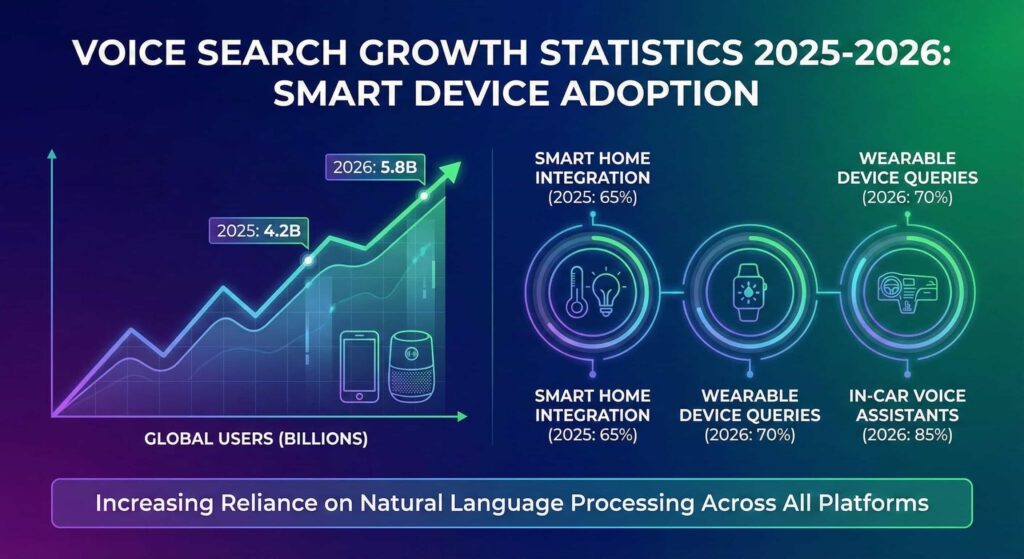
The figures tell a story that every owner of an HVAC or plumbing firm has to know. Voice search is becoming increasingly popular. Over 27% of people today use voice search on their phones, and over 75% of households are predicted to have smart speakers by 2025. But what does this mean for the plumbing or HVAC firm in your area? It indicates that your old SEO plan, which was based on input keywords, is no longer helpful.
When home issues arise, people often use voice search on devices like smartphones or smart speakers (e.g., “Find a licensed plumber near me”). These 4-6 word queries highlight the importance of local SEO for businesses. Voice search results load in just 4.6 seconds, 52% faster than typical search results, making speed optimization a crucial factor.
How Consumers Actually Use Voice Search for Home Services?
Voice search behavior differs dramatically from typed queries, and understanding this distinction is crucial for HVAC local SEO success. People speak in complete sentences when using Siri, Alexa, or Google Assistant, asking questions like “Who is the best-rated HVAC contractor in Dallas?” rather than typing “HVAC Dallas. This conversational pattern creates both challenges and opportunities for plumbing lead generation and emergency service marketing. AI chatbots improve PPC ad lead conversion for companies and HVAC stores using voice search.
This conversational intent creates new opportunities for lead generation. Approximately 76% of voice search queries include “near me” or other local-intent phrases, underscoring the critical need for hyper-local optimization for success. When someone says, “Alexa, who can install a ceiling fan this week?” they expect immediate, relevant answers from licensed professionals in their area. Voice assistants pull these results from structured data, local business profiles, and featured snippets, not just from traditional organic rankings.
The Three Critical Moments Voice Search Captures
Voice technology effectively captures three key customer moments that typed searches often overlook:
- Emergency Situations: When a pipe bursts at midnight, homeowners use voice commands to seek assistance while addressing the issue.
- Hands-Free Multitasking: While cooking or driving, customers inquire about routine maintenance, such as “How much does it cost to replace a water heater?”
- Exploration Queries: Customers research options by asking questions like “Why is my air conditioner not blowing cold air?” before scheduling service calls.
Each of these moments represents revenue opportunities that voice-optimized businesses capture while competitors remain invisible.
Schema Markup: The Secret Weapon That Makes Voice Assistants Find You Instantly
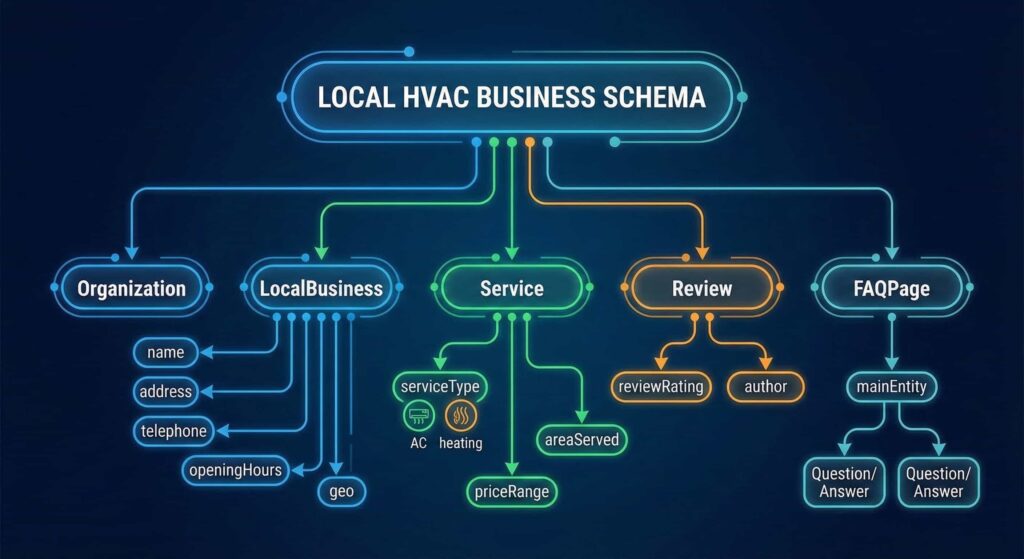
Schema markup acts as a translator between your website and voice assistants by providing structured data that search engines can easily interpret and prioritize. This organized approach increases the likelihood that your business will appear in voice search results.
Properly implemented schema markup significantly improves your chances of appearing in featured snippets, local map packs, and voice search results. Google’s algorithms use this structured data to accurately identify your services, location, operating hours, and expertise without interpreting unstructured content.
Essential Schema Types Every HVAC and Plumbing Business Needs
Four types of schema markup form the building blocks for a home services keyword strategy around voice search:
- Local Business Schema: It includes your all-important NAP (name, address, phone number), business hours of operation, service areas, and geolocation coordinates that tell Google where you can be found. This schema directly assists voice assistants when a person inquires about local contractors.
- Service Schema: Each offering is defined using a Service Schema, one for AC repair, another for furnace installation, etc., complete with service area coverage and pricing, where applicable. Tangential schema markups for each service create several channels for voice search discovery.
- Review Schema: What Do You Get? The Review Schema. Here is what the review schema will do for you: Focuses on Trust Building. As shown, the Review Schema displays your average scores and a few of your best customer testimonials to accumulate into that trust factor, which drives hiring decisions. Voice assistants frequently include ratings when suggesting businesses: “I found Smith HVAC with 4.8 stars.”
- FAQ Schema: This schema marks up questions and answers on your page so Google can display them directly in search results. It helps you capture the “People Also Ask” boxes for queries like “What are the signs I need to replace my furnace?” or “Why is my water heater leaking?
How Schema Markup Wins the Voice Search Battle?

Competitive advantage emerges when you understand how voice assistants operate. When users ask Alexa or Siri for an emergency plumber, these systems first scan structured data and prioritize businesses with complete, accurate schema markup. Competitors without schema are often invisible in voice search results, even if they rank highly in traditional search results.
Schema markup is especially effective in emergency service marketing because voice assistants prioritize details such as 24/7 availability, emergency response times, and service coverage areas, all of which are conveyed through structured data. A well-marked page featuring “24-hour emergency plumbing service” will outperform higher-ranking pages without schema when users urgently request immediate assistance.
Optimizing HVAC Websites for Siri and Alexa: The Technical Foundation
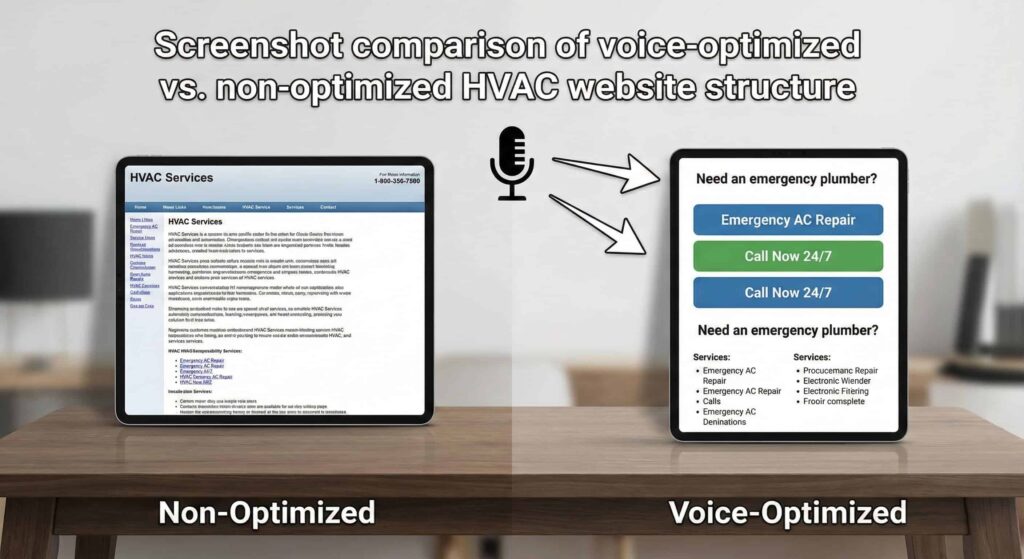
Technical optimization separates businesses that occasionally appear in voice search from those that dominate their local markets. Voice assistants demand fast-loading, mobile-friendly websites with conversational content structured for easy extraction. The average voice search result page contains just 29 words, meaning assistants extract concise, direct answers rather than reading lengthy paragraphs.
Your HVAC or plumbing website needs dedicated service pages answering specific voice queries. Instead of a generic “Services” page, create individual pages for “Emergency AC Repair in Phoenix,” “Tankless Water Heater Installation in Scottsdale,” and “Leak Detection Services in Tempe. Each page should target conversational long-tail keywords that match how people actually speak.
Content Structure That Voice Assistants Love
To optimize for voice search, you need to rethink how you structure your information around question-based formats. Use specific questions as H2 or H3 headings to start sections. For example, “What makes a furnace stop working?” or “How long does it take for a plumber to fix a broken pipe?” Next, write short answers of 40 to 50 words that voice assistants can read out loud.
Apply these content patterns throughout your site to create engaging, high-quality content. Consider using AI tools to generate content that encourages visitors to stay longer and make purchases.
- Immediate answers first: Give the solution in the first 2-3 sentences before detailed explanations.
- Bullet lists for steps: Break down processes like “5 Signs You Need AC Repair” into clear, scannable points.
- Tables for comparisons: Show pricing ranges, service options, or feature comparisons in structured tables.
- FAQ sections: Dedicate pages to answering 10-15 common questions about each major service.
This layout naturally includes secondary keywords such as “furnace repair company” and “drain cleaning service” while remaining easy to read and follow.
Mobile-First Speed Optimization
Voice searches are predominantly performed on mobile devices, with 91% of all voice queries occurring on smartphones. It makes Mobile Speed Optimization mandatory to tap into this voice search traffic. If you want to play in voice search, your pages need to load in under 3 seconds.
Some technical optimizations you might want to make to speed up mobile include image compression, minified scripts, script caching, and the use of Content Delivery Networks. In addition to speed, mobile optimization means big, easy-to-tap click-to-call buttons, streamlined navigation, and simplified forms designed for mobile users. Since many voice searchers are in emergencies, they rarely want to fill out a form. Make your phone number unmissable with sticky headers that keep the “Call Now” button visible as they scroll.
Google Local Services Ads Management with AI: The 2026 Competitive Edge
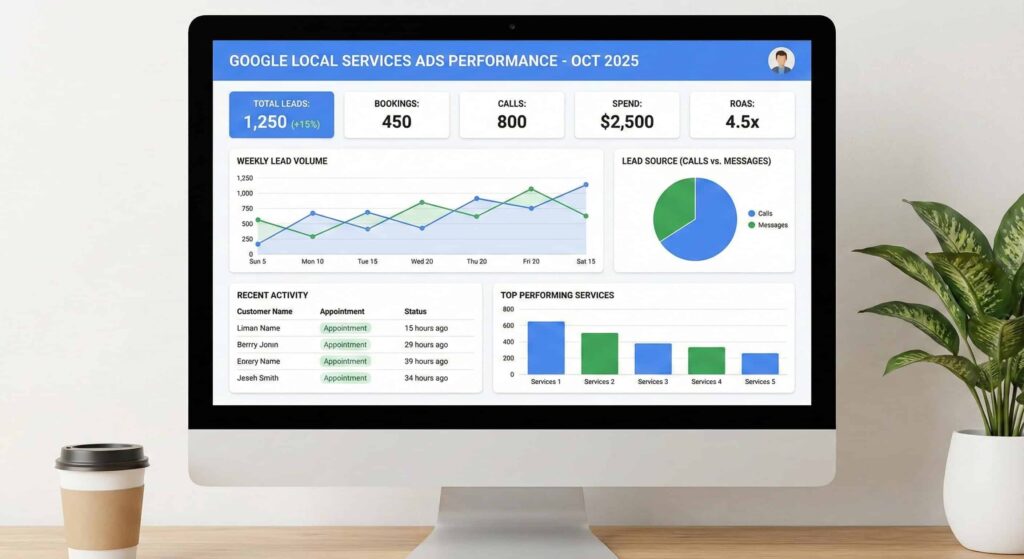
In 2026, Google Local Services Ads (LSAs) have changed significantly, thanks to AI-powered management systems that help HVAC and plumbing businesses generate more voice search leads. These ads now show up at the very top of search results, even above organic listings and regular Google Ads. This means they are the first-choice voice assistants for local services. To improve results and ad performance, businesses should utilize AI-powered ads in Google Ads campaigns.
Adding AI to LSA management has significantly improved Lead generation efficiency. Now, Google’s Performance Max campaigns use conversational prompts and generative AI to automatically write ad headlines, descriptions, and landing pages using your business information and customer behavior. This automation helps even minor plumbing and HVAC companies compete with bigger businesses by using machine learning to improve bids and target the right audience.
AI-Powered Bidding and Targeting Strategies
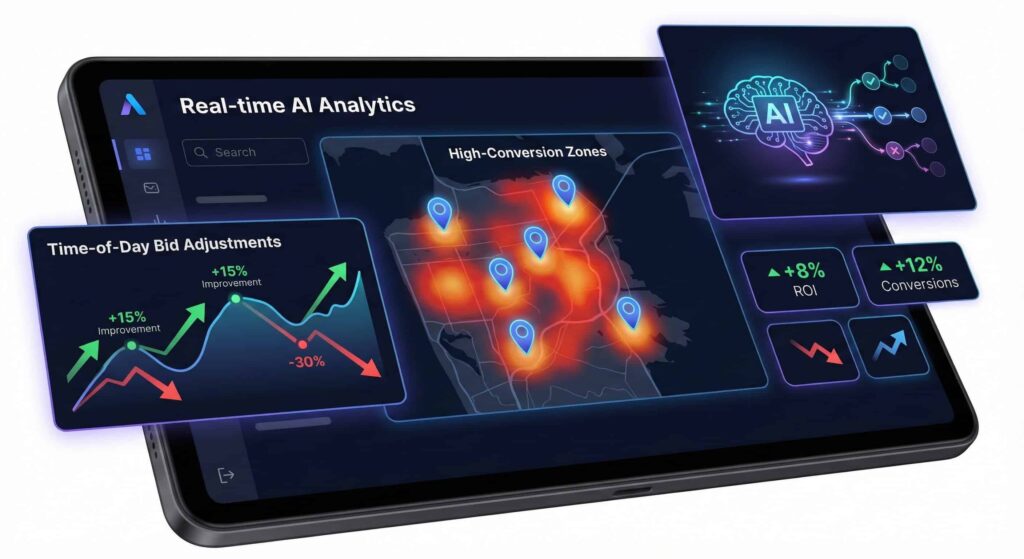
AI analyzes thousands of signals, such as time of day, device type, user search intent, location, and behavior, to optimize your LSA bids in real time. Your ads will automatically appear more prominently when people are most likely to buy, such as during late-night emergency searches or on weekends when people ask maintenance questions. Your ad spending will decrease during times when people are less likely to buy. Follow Google Ads guidelines for the best results from local areas.
By 2026, innovative campaign systems will use hyperlocal targeting to reach people in specific neighborhoods and streets. This ensures your HVAC or plumbing ads reach people in your actual service area. With AI-based segmentation, you can send different messages to different client types, such as first-time homeowners seeing ads distinct from those for property managers or returning customers.
Budget optimization has come a long way. For example, Google Smart Ads automatically divides spending between Search, Maps, YouTube, Gmail, and local news sites. The system identifies which channels drive real phone calls and booked appointments, then moves money to the platforms that work best, with no human input.
Voice Search Integration with Local Services Ads
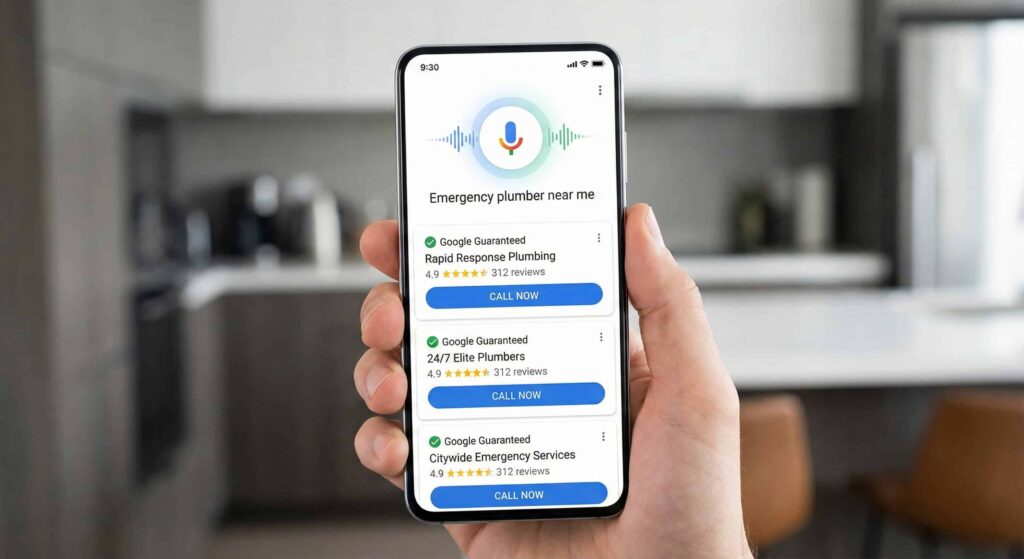
Local service providers, like HVAC professionals, can now generate more leads by using voice assistants connected to Google Local Services Ads (LSAs). When someone asks Google Assistant for urgent help, such as an emergency plumber, the system first shows Google Guaranteed businesses with complete LSA profiles. These voice search results highlight features such as star ratings, license checks, technician background checks, and estimated response times. This helps build trust with customers and increases the chances they will choose your business.
To improve visibility in voice search results for LSAs, keep your Google Business Profile accurate and up to date, ensure it aligns with your advertising campaigns, and implement robust local SEO strategies. As with Local E-Commerce SEO for online stores, accurate location data, service details, business hours, and customer reviews influence ad generation and ranking. Outdated or inconsistent information can lower ad quality scores, decreasing your chances of appearing in top voice search results and limiting opportunities to reach local customers seeking immediate services.
Emergency Service Marketing: Capturing Crisis Moments Through Voice
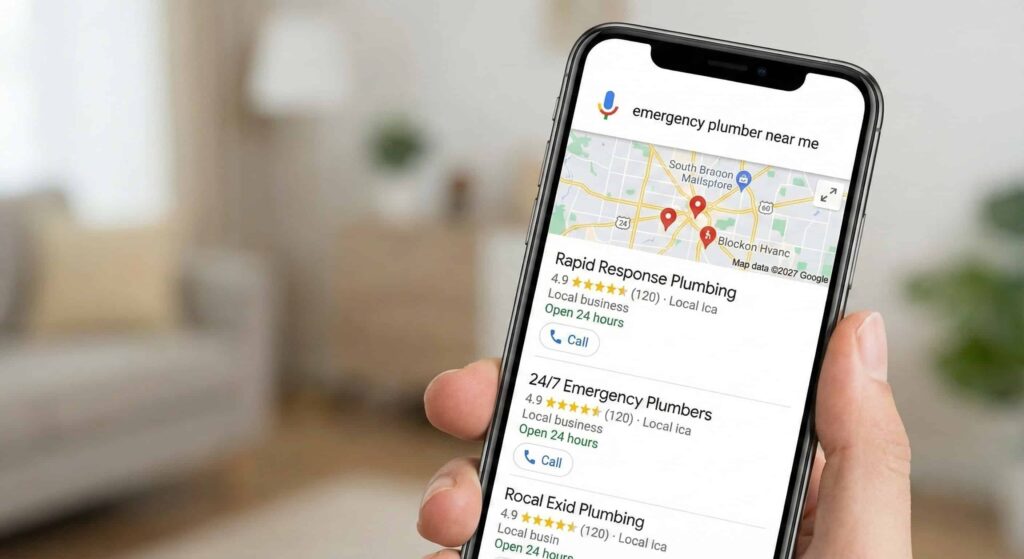
Plumbing and HVAC companies get the best leads from emergencies, and voice search is now the best way to find them. When a homeowner has a broken pipe, an air conditioner that stops working during a heat wave, or a flooded basement, they grab the nearest item and call their emergency service; they don’t meticulously enter keywords into search bars.
The psychology behind emergency searches is very different from that of ordinary maintenance searches. When someone is in a hurry, they don’t care about price or shopping around; they need aid right away from a licensed specialist who can get there soon. Voice search is the best solution in this situation, as it lets the customer search without using their hands while they deal with the problem.
Structuring Content for Emergency Voice Queries
Set up special emergency service pages designed for voice searches, such as “Emergency AC repair open now near me” or “24-hour plumbing service.” These pages should be structured differently from your regular service pages.
- Immediate Visibility: Make sure your emergency phone number is easy to see at the top of the page, along with a big button that lets people call you right away.
- Response Time Guarantee: Clearly state your response time, such as “24/7 Emergency Service – Arrive Within 60 Minutes,” or another promise you can keep.
- Service Area Coverage: List the exact cities and neighborhoods where you offer emergency services so customers know if you can help them.
- Credentials and Trust Signals: Display your licenses, insurance, Google Guaranteed badges, and customer ratings upfront to build trust with visitors.
Answer common emergency questions in a friendly way, like “What should I do while waiting for the plumber?” or “How to shut off your main water valve.” Sharing helpful tips like these builds trust and lets you use important emergency keywords naturally.
Schema Markup for Emergency Services
The emergency service schema is the structured data that voice search uses in an emergency. Specify markup over 24-hour on-call, response time to emergency conditions, and after-hours contact number(s). Geographic schema markup for your service area helps voice assistants connect your business to local emergency questions.
Use local schema or neighborhood modifiers, and emergency-related structured data, on all location pages. So, when someone in North Dallas wakes up shivering, grabs their phone, and says “find me emergency HVAC tech near 75248” at 3 am, the schema across your website is going to make you show up in that heat-of-the-moment search request.
Measuring Voice Search Success: Metrics That Matter for HVAC and Plumbing Lead Generation

Old-school SEO metrics may not accurately reflect the potential impact of voice search, particularly since voice queries often don’t result in clicks. Yet virtual assistants usually don’t broadcast their responses or are directly called to a numbered line. And so companies have to reconsider how they measure the efficacy of voice search in their SEO strategy. For multi-location businesses in 2025, you can’t measure conversions like we do today, track how voice search is driving local engagement and calls , or track how screen conversions are driving calls over all those options to click.
To get an accurate read on how voice impacts your business (especially for local SEO and multi-location companies), it’s crucial that you implement call tracking. You can do this by applying a different tracking number to your website and GMB profile, so you know exactly which search and page are generating phone calls. – Track which voice queries lead to calls, and when those calls happen, so you can tie them back into if they are generating actual conversions (e.g., appointments scheduled) – does wonders for your local SEO reporting 2025.
Key Performance Indicators for Voice Search Optimization
Keep an eye on these key metrics to see how well you’re doing with voice search.
1- Voice Search Traffic Patterns: Watch for increases in mobile traffic during standard voice-search times, such as mornings when people commute, evenings, and late-night emergencies.
2- Featured Snippet Captures: See how often your HVAC or plumbing content appears in the featured snippet for your main questions. Voice assistants usually read answers from these featured snippets.
3- Local 3-Pack Rankings: See how visible you are in the map pack across different ZIP codes and voice search types. Voice search often highlights these local results.
4- Google Business Profile Insights: Look at how customers find your business, especially phone calls, requests for directions, and messages that come from voice-enabled devices.
5- Question-Based Query Rankings: Use Search Console to find out which conversational questions, such as “How much does furnace installation cost?”, your site is ranking for.
Continuous Optimization Based on Performance Data
You need to keep improving voice search optimization based on actual performance data. When you find voice searches that drive a lot of sales, create content just for those questions. If your competitors take your featured snippets, update your content right away with new statistics, a better layout, or more schema markup.
Experiment with various content formats and storytelling content optimization techniques to optimize for voice assistants. Test whether tables outperform paragraphs and numbered lists outperform bullet points. To maximize conversions from voice traffic, A/B test the placement of your call-to-action, urgent alerts, and trust indicators.
Building a Voice-First Local SEO Strategy for Long-Term Dominance
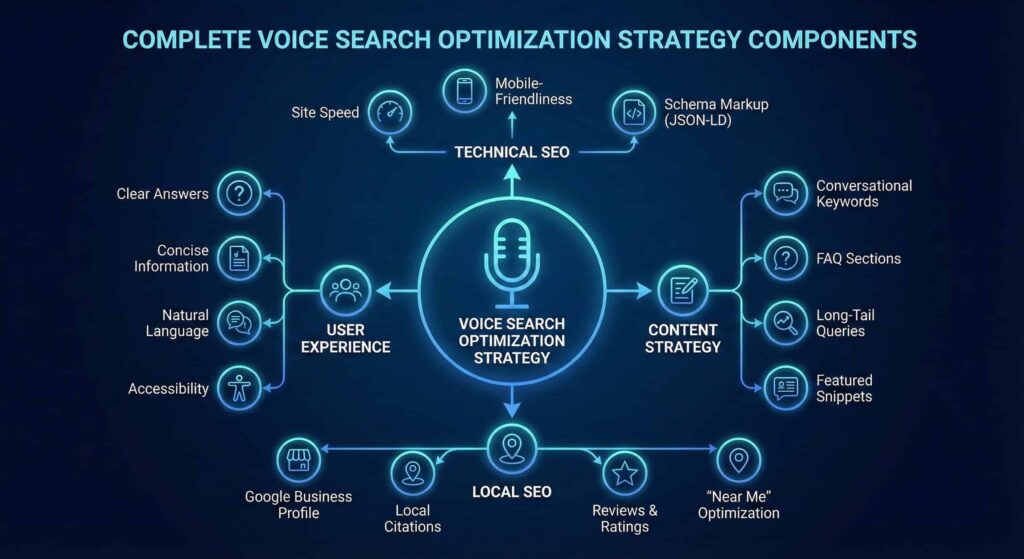
Achieving sustainable voice search success in 2025 isn’t about adding isolated tactics, it’s about integrating a comprehensive strategy across all your digital marketing channels. For International and Local SEO, market dominance comes from systematically embedding voice-first optimization principles throughout your entire online presence, rather than relying on minor tweaks like schema markup or FAQ content alone.
To get started, conduct a thorough audit of your current digital footprint with a specific focus on voice search optimization. Evaluate the completeness of your Google Business Profile, ensure proper schema markup implementation, assess your mobile page speed, and review the conversational quality of your content. Also, make sure emergency services are clearly visible, especially for local search results. This baseline assessment will help identify the highest-priority improvements, setting the stage for greater returns and stronger online visibility.
Content Strategy for Voice Search Authority
Develop a content calendar focused on answering the exact questions your customers ask voice assistants. Use keyword research tools to identify question-based queries, then create comprehensive resources addressing each topic. Structure content hierarchically: start with broad questions like “What causes AC problems?” then drill into specific subtopics like “Why is my air conditioner freezing up?” or “What does it mean when my AC blows warm air?”
Using this topic-cluster method helps you naturally include essential keywords and long-tail keywords. When your content covers topics thoroughly, including related questions and FAQ sections, it can rank for many voice search variations without over-repeating keywords.
Make your content local by mentioning specific neighborhoods, landmarks, and standard HVAC or plumbing issues in your area. For example, rather than writing a general article about “furnace maintenance,” try “Preparing Your McKinney Home’s Heating System for North Texas Winter” or “Common Plumbing Issues in Dallas Historic Districts.” This kind of local content resonates with readers and helps your site appear in voice searches focused on location.
Integration with Paid and Organic Strategies
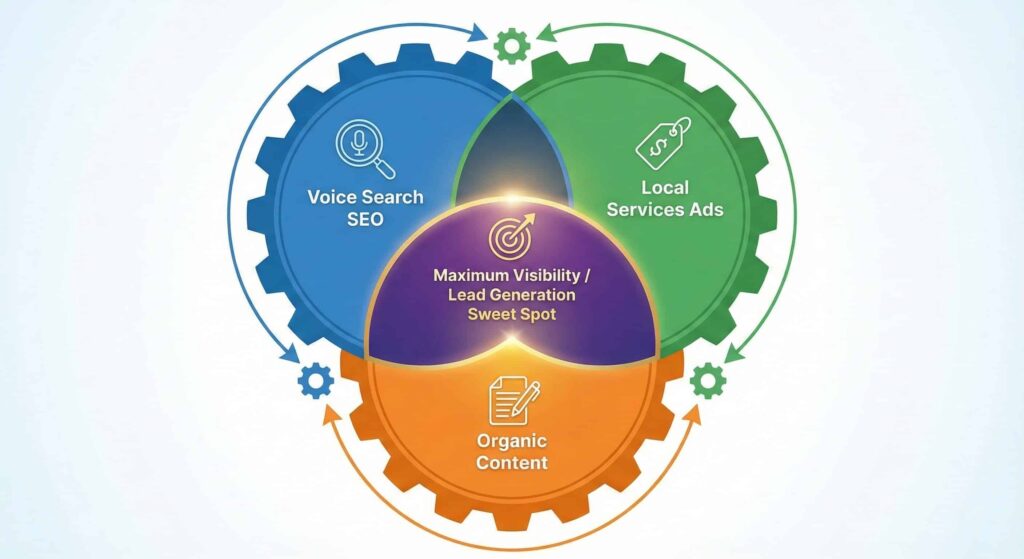
The best HVAC and plumbing companies use voice search optimization alongside paid advertising (AI PPC Ads and AI Social Media Ads) and traditional SEO. Use what you learn from high-converting PPC keywords to help you make content. Popular paid search phrases show that customers are really interested in what you have to say, so you should make organic content that targets those terms.
On the other hand, organic keywords that rank for featured snippets can lower PPC costs by building subject authority, which raises quality scores. This synergy keeps your brand prominent in voice search results at all times and gets you the most out of your money.
Systematically use social proof by asking for reviews that talk about the quality of service, how quickly they respond, and how professional they are. Voice assistants often use ratings and review counts to suggest area contractors, so managing your reputation is an important part of voice search success.
The Future Beyond 2026: Preparing for Next-Generation Voice Technology

Voice search is evolving rapidly, and conversational AI is improving at understanding context, purpose, and complexity. The move away from keyword-based search and toward conversational search is accelerating. Platforms like Google AI Overviews, Bing Copilot, and generative search interfaces are changing what “visibility” means for local companies.
The next big thing is agentic AI systems, which are virtual assistants that can perform multi-step tasks independently. Imagine a consumer saying to their AI assistant, “Find a good HVAC contractor, set up an inspection, and add it to my calendar.” The whole thing would happen without anyone having to do anything. Companies that become ready for this future will rule their marketplaces.
Positioning for AI-Native Search Experiences
Prepare for AI-driven search by creating natural language content that addresses user intent, not just keywords. Generative AI values authoritative, transparent, and credible information with accurate citations and source attribution. Demonstrate expertise through detailed explanations, case studies, and practical guidance.
Structured data is increasingly important as AI systems depend on machine-readable information for accurate responses. Implement a comprehensive schema across your website to ensure that all services, locations, FAQs, and reviews are adequately marked for AI interpretation.
Voice and visual search are converging, allowing customers to photograph HVAC units or plumbing fixtures and ask, “What’s wrong with this?” Optimize images with descriptive file names, alt text, and explanatory content to prepare your business for the future of multimodal search.
Partner with Dandah Digital for Voice Search Dominance

Voice-first search is changing the way homeowners find and hire HVAC contractors and plumbers. Companies that act early can win more customers, while those that wait may miss important leads.
Dandah Digital delivers AI-driven marketing solutions that position home service businesses at the forefront of voice search results. Our services include:
- Advanced Schema Markup Implementation: We add custom-coded data to help your business be the top choice on Alexa, Siri, and Google Assistant.
- Voice Search Content Optimization: We create conversational, question-based content designed for voice assistants.
- Google Local Services Ads Management: We use AI to run campaigns that help you get more emergency leads at the best possible cost.
- International and Local SEO: We use strategies that boost your visibility in both local neighborhoods and wider regions, driving website traffic.
- AI Chatbot Integration: Our automated systems greet and assist voice search visitors right away.
We work with companies of all sizes, from global brands to local businesses, offering digital solutions tailored to the HVAC, plumbing, and home service industries. Our approach has helped hundreds of contractors enhance their online presence and establish trust with their customers.
Don’t let competitors take the voice search leads that could be yours. Don’t let competitors claim the leads that should be yours. Contact Dandah Digital today for a Voice Search Audit. Let’s ensure that when your next customer asks Alexa for help, your name is the answer she gives.