


The telehealth market is exploding, worth an estimated $94.14 billion in 2024, according to a 2024 report by [Grand View Research / Statista], and is anticipated to nearly double by 2030.
What has started as a convenience is now widely seen as the standard, but the growth has also fostered fierce competition for every patient click. Virtual care companies must now clear two hurdles: gaining patients’ trust sight unseen and passing muster with Google’s and Bing’s stringent “Your Money, Your Life” (YMYL) standards.
This blog article guide demonstrates how to meld clever telehealth marketing with E-A-T value and content focused on patients, and help remote doctors and the startups they work for earn authentic patient trust without coming off as cold, clinical, or robotic.
Whether you’re growing a virtual clinic from scratch or scaling an established practice, YMYL SEO isn’t something you skip; it’s the foundation for long-term patient acquisition.
Pro Tip: Improve FAQ sections with schema markup using real patient questions to enhance featured snippet visibility and provide quick answers. Structured, clear responses in YMYL topics are favored by Google, leading to increased clicks and engagement
Understanding “Your Money Your Life” and Its Impact on Telehealth
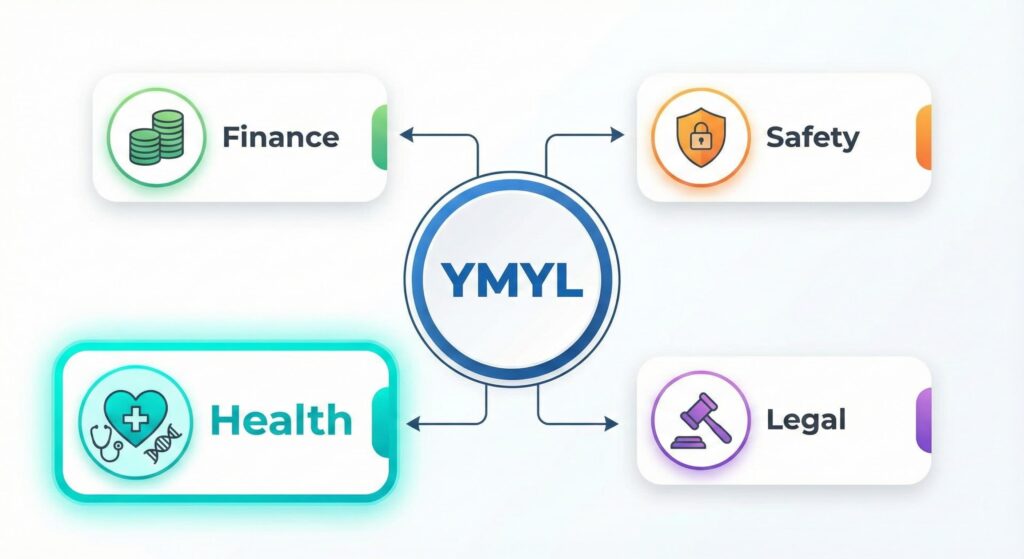
Google introduced the YMYL designation to prevent people from being tricked into receiving lousy advice about matters that matter a lot to their health. Health, be it medical advice or healthcare services, is symptomatic of this. When a user searches for “online doctor for chest pain” or “telehealth psychiatrist near me,” Google aims to elevate pages that are factual, safe, and expert, not content farms or unverified sources.
For telehealth companies, this dramatically raises the stakes. Your website is more than just a marketing tool; in many cases, it is the first point of contact for a patient seeking care from your team. You apply healthcare and medical SEO techniques here to gain more benefits and connect with more patients.
If your content feels too thin or promotional, or seems to have little connection to clinical reality, ensure your website and social media content are optimized for clinical business patient needs.
Content is significant for building credibility; search engines will catch on quickly. Patients are sure to notice more importantly. YMYL compliance is all about revering the patient journey and recognizing that trust must be built at each contact point. Telehealth businesses optimize their websites, social media content, and ads using AI content optimization.
The bottom line? Telehealth websites that invest in real expertise, clear communication, and patient-centric content are more likely to outrank rivals who treat SEO as a box-ticking exercise.
E-E-A-T: The Four Pillars That Search Engines Use to Judge Healthcare Content
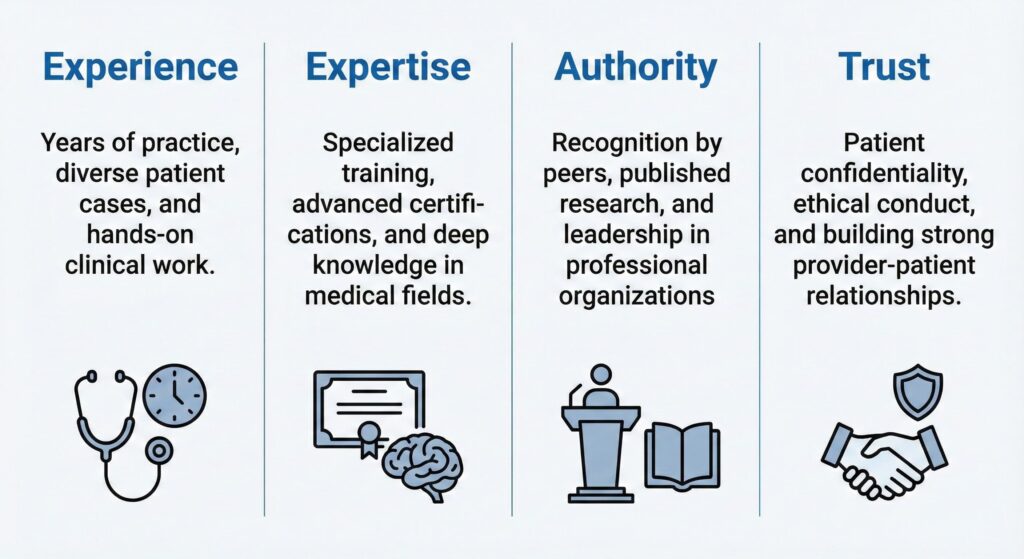
As of 2025, the E-E-A-T guideline is central to Google’s content evaluation and decision-making. It needs content to show real-world Experience, sincere Expertise, proven authority, and rock-solid Trustworthiness, especially for sensitive “Your Money or Your Life” (YMYL) subjects such as health.
Then it’s much more likely that they’ll want to see your site be transparent about clinician credentials, cite reputable sources, share their first-hand patient-care experiences, and have robust security and disclosure practices” in reviewing the signals of quality.
In short, for telehealth content today, E-E-A-T will not be optional. It’s the very foundation on which both search visibility and absolute patient trust must be built.
Experience: Demonstrating Real-World Patient Care
Your team sees these challenges every day. Share those stories (anonymously). When patients see you understand their struggle, they trust you. It could be anonymous care stories, snippets from the frontline of managing chronic conditions remotely, or what providing virtual care means for specific populations (seniors, new parents, and people in rural areas) on a day-to-day basis. What are we learning? And when readers feel that your team really gets where they are coming from, they will be much more willing to schedule a consult.
Expertise: Credentials That Patients and Algorithms Respect
Expertise means your health content is written or reviewed by certified clinicians whose credentials are visible. All medical articles should have a byline that states the author’s name, specialty, and credentials. A line as basic as “Reviewed by Dr. Shaina Smith, MD, Internal Medicine” lends credibility to patients and signals to search engines that your content comes from reputable sources.
Authority: Recognition Beyond Your Own Website
When other renowned institutions recognize your work, your authority grows. It includes being cited in medical papers, featured in reputable health media, working with hospitals or research institutions, and earning high-quality backlinks from renowned healthcare directories. For telehealth brands, attending industry conferences, producing original research, or giving expert opinion to the media all help to boost their authority signals. It will boost website traffic for clinical doctors, leading to more patient appointments.
Trust: Privacy, Honesty, and Patient-First Communication
The most critical part of healthcare content is trust. Patients need to know exactly how their data is safeguarded, what your services can and can’t do, and how to get help if something goes wrong. Trust is built by having clear privacy policies, following HIPAA rules, having SSL certificates, using clear disclaimers, and using honest language. Both patients and search engines respond positively when content doesn’t make big claims and clearly explains the pros and cons of telemedicine.
Pro Tip: Build trust quickly with verified reviews, doctor intro videos, and visible security badges. Transparency regarding tech partners and data protection reinforces HIPAA and GDPR compliance, significantly reducing bounce rates.
Telehealth Digital Marketing: Connecting Search Intent with Patient Needs
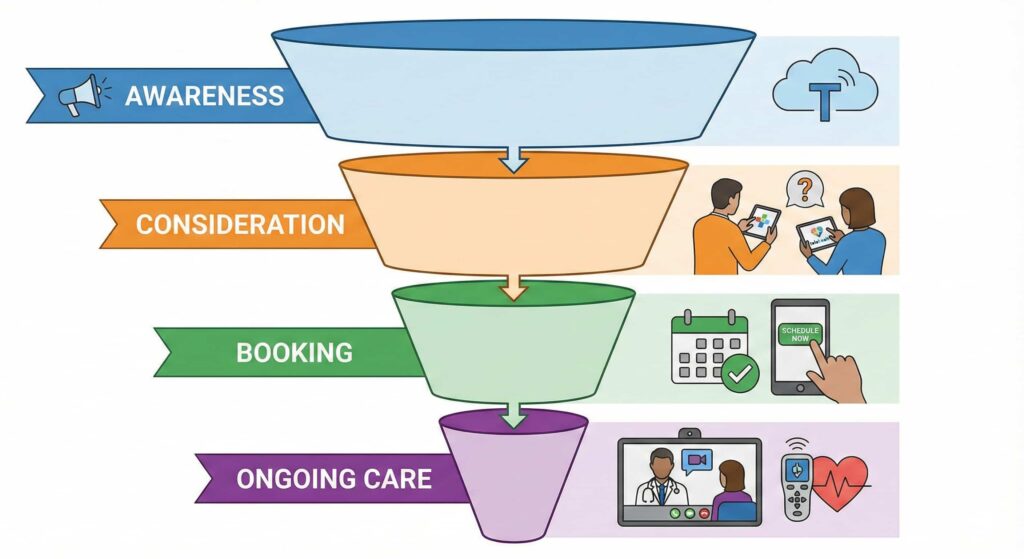
To do telehealth digital marketing well, you need to know what patients are looking for, make content that really benefits them, and set up processes that turn interest into appointments. Search-based patient acquisition differs from traditional advertising because it focuses on reaching patients when they are actively seeking care, not interrupting them with messages they didn’t ask for.
A good telehealth marketing plan usually has the following:
- SEO for Telemedicine Startups and Established Providers: Making service pages, educational content, and technical foundations better so that they show up for high-intent searches.
- Paid Search and Social Advertising: Capturing instant demand with Google Ads, Bing Ads, and social media ads that target patients actively seeking virtual care.
- Content Funnels: Helping patients go from looking up their symptoms to learning about telehealth choices to making their first visit without being pushy or sales-focused.
- Conversion Optimization: Making sure that landing pages, forms, and booking routines are quick, easy to use on mobile devices, and give people peace of mind.
When Dandah Digital works with telehealth customers, the focus is always on developing sustainable solutions rather than chasing short-term traffic spikes. Clinics can lower the cost of acquiring new patients while improving the quality of patient inquiries by using a single strategy that combines SEO, paid ads, social media marketing, and AI chatbots.
Pro Tip: Analyze chatbot queries to identify common patient questions. Use these insights to create blog posts or FAQ content, improving both organic rankings and conversion rates by addressing actual patient needs.
Patient Acquisition Costs: Why Organic Search Delivers Long-Term Value
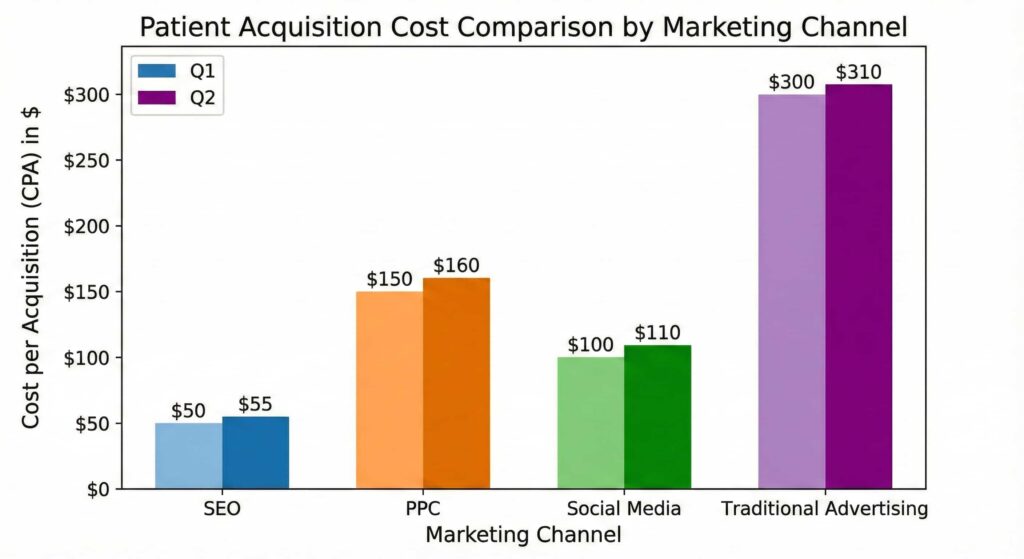
The cost of acquiring a customer is a key metric any telehealth business should focus on. It is the sum of all marketing spend over that period, then divided by the total number of new patients acquired. When acquisition costs get too high, growth is unsustainable, even if patient volume looks good on paper.
Organic search from SEO remains one of the lowest patient-acquisition costs, as once you’re ranking, traffic continues to flow without additional advertising spend. Paid PPC and Social Media Campaigns are great for driving quick demand, but they stop once your budget runs out. Instead, a balanced approach is to leverage paid channels for speed and testing while building organic assets that compound over time.
For telemedicine startups, striking the right balance is especially important. Early-stage clinics typically can’t compete with established players on ad spend alone. But by dedicating to health care SEO compliance, quality content, and strong E-A-T signals early on, smaller providers can create a lasting competitive edge that only gets stronger every month.
How to Get More Patients for Virtual Care: Practical Keyword Strategies?
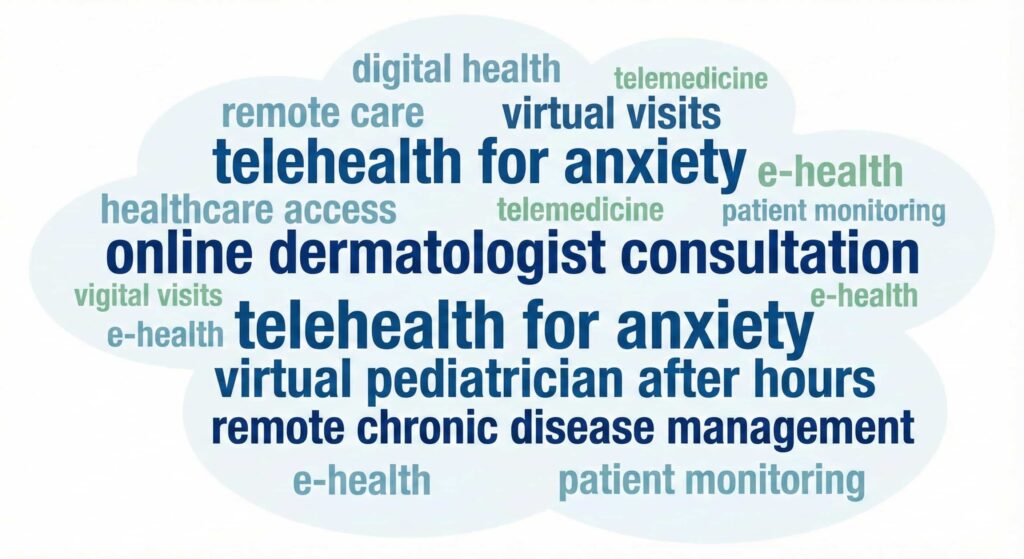
Innovative keyword strategies don’t just go after broad terms like “telehealth” or “telemedicine.” Instead, they go after long-tail keyword phrases that match real patient inquiries and have a strong commercial purpose. These terms are usually less competitive and more likely to attract patients who are ready to schedule an appointment.
Some good long-tail keyword themes are:
- “How to get more patients for virtual care” (for clinic owners and healthcare decision-makers)
- “Telehealth for chronic pain management.”
- “Online psychiatrist for depression and anxiety.”
- “Virtual consultation for skin conditions.”
- “Same-day telehealth appointment near me.”
- “Best telemedicine app for seniors.”
The trick is to use these phrases in a way that makes sense in helpful content like service descriptions, educational articles, FAQ sites, and patient guides, without making them sound forced. Patients don’t like it when search engines identify keyword stuffing, which is something they do very well. Write for actual people first, and the keywords will fit in without any problems.
Keyword research at Dandah Digital is always based on what patients want and what happens in real life. The goal isn’t only to get high rankings for specific phrases; it’s also to get patients who really need and can use your services. Telehealth clients will turn more traffic into scheduled appointments using this method, along with targeted social media marketing and AI-powered chatbots that generate leads and answer common inquiries immediately.
Healthcare SEO Compliance: Growing Responsibly in a Regulated Industry

Following healthcare SEO rules isn’t only about avoiding fines; it’s also about creating trust with patients and regulators. Telehealth operates in a highly regulated environment where privacy, data security, and accurate medical information are must-haves.
Some important things to think about when it comes to telehealth SEO are:
- Tracking and analytics: Keep marketing analytics and patient portal environments separate. If not set up correctly, standard tracking scripts can get sensitive information.
- Accuracy of the content: Don’t make diagnostic claims, promise results, or use words that could be regarded as medical advice. Focus on discussing services, choices, and when patients should go to urgent care.
- Reviews and testimonials from patients: Use genuine, voluntary reviews, and don’t share any information that could identify patients without their permission.
- Disclaimers and openness: Make it clear that educational content is not the same as customized medical advice, and tell people to talk to certified doctors about their own issues.
- The basics of security: Any telehealth website needs to have SSL certificates, secure forms, and clear privacy rules.
When you include compliance in your marketing plan from the start, you don’t have to make expensive changes later, and you develop a brand reputation that patients feel safe trusting with their health.
Pro Tip: Conduct quarterly HIPAA and GDPR audits of analytics and ad tools. Employ platforms like OneTrust or Osano to proactively identify privacy risks, preventing costly remediation and maintaining patient trust.
Medical Content Marketing: Building Resources Patients Actually Use

Medical content marketing for telehealth involves more than just writing blog posts. What that means is creating a library of resources that guide patients through their care journey from initial symptoms to ongoing management.
Telehealth content ecosystems that work well typically consist of:
- Analysis Articles: Explain what’s known about symptoms and treatment, as well as guides to telehealth authored or reviewed by licensed clinicians.
- Condition and Program Pages: In-depth, clear descriptions of what virtual care looks like for specific needs, such as diabetes management, mental health support consults, or post-surgical follow-ups.
- Clinician Profiles: Human narratives, credentials, and specialties that make patients feel they are connecting with real people, not an anonymous technology.
- FAQ Hubs: Answers in plain language to common questions like “Is telehealth secure?” “Are video visits for prescriptions available?”, or “What technology do I need for a virtual appointment?
- Video Content: Brief videos with doctors explaining ailments or guiding patients through what to expect from their first telehealth visit.
Content that is truly helpful, in natural language, and frequently refreshed in line with the latest medical guidelines can satisfy both patient expectations and E-A-T. It is the bedrock of medical content marketing: building trust rather than following clicks.
A method that has been successful for healthcare clients at Dandah Digital is to have a human-led content strategy, while leveraging AI to support research and optimization. Clinicians need to focus on accuracy and patient relevance, whereas AI-powered features spot content gaps, conduct competitive analysis, and perform technical SEO. Boost engagement with social media ads for popular content so it reaches patients who might not be actively seeking but are receptive to learning about virtual care options.
Local and International SEO for Multi-Region Telehealth Providers

And while telehealth may feel borderless, search engines haven’t stopped prioritizing geographic relevance and licensing status. When a patient searches for “online doctor near me,” they expect to find providers who can legally help them where they are.
For providers serving multiple states, or internationally, Effective Local SEO and International SEO for telehealth, including:
- Landing Pages Based on Location: Pages for each state, region, or country that you work in, which explain licensing, accepted insurance types, what languages you offer, and any local regulations.
- Correct Business Listings: SEO-activated and optimized Google Business Profiles, healthcare directory comparison sites (think Healthgrades, Zocdoc, regional equivalents), including identical NAP (Name, Address, Phone number) info for your brand across the internet.
- Localized Content: content/articles/guides that address region-specific queries, such as when and how insurance will cover you, rules around prescriptions, cultural expectations, or time zone access.
- International SEO: Individual language-specific versions with correct hreflang tags, culturally relevant messaging, and geo-targeted paid marketing for multinational telehealth brands.
This framework allows your patients to find you when searching for location-based questions, while giving them confidence that your services meet legal requirements and their expectations.
Technical SEO: The Invisible Foundation of High-Performing Telehealth Websites

There is a layer of technical SEO beneath any telehealth website that performs well and converts visitors into patients. Users don’t always notice it, but they can feel it. Technical SEO foundations have an impact on everything, from how quickly pages load to how well search engines can interpret what you offer.
Some critical technical priorities for telehealth websites are:
- Speeding up Pages: Patients get angry when pages take too long to load, which makes them leave more often. Compressed images, efficient code, and properly implemented caching all help keep load times short.
- Mobile-First Design: Most patients look for healthcare on their phones; therefore, every form, menu, and booking flow needs to perform perfectly on tiny screens.
- Markup for Structured Data: Schema types specialized to healthcare, such as Medical Organization, Physician, Medical Clinic, and FAQ Page, help search engines understand who you are, what you do, and where you work.
- Clean Site Architecture: Logical URL structures, explicit internal linking, and properly structured headings (H1, H2, H3) make it easier for both visitors and crawlers to navigate your content.
- Security: To keep patients safe and comply with the law, all pages must have SSL certificates, booking forms must be secure, and data management must be clear.
Technical SEO helps with everything else, including your content, your authority signals, and your E-E-A-T work. Even the best material can struggle to reach patients who need it if it lacks a strong technical foundation.
Pro Tip: Monthly Core Web Vitals audits optimize site speed and interactivity. Faster load times improve rankings and bookings. Mobile UX testing identifies conversion-hurting friction.
Measuring What Matters: Telehealth SEO Metrics That Drive Decisions
To improve things, you need to measure them, but telehealth providers have to balance patient privacy with the demands of analytics. The idea is to keep an eye on important indicators without getting critical health information in the wrong way.
Some useful telehealth marketing metrics are:
- Organic Search Traffic: People coming to service and content pages from search engines like Google, Bing, and others.
- Appointment Inquiries and Bookings: The most crucial conversion measure is how many visitors actually make appointments.
- Conversion Rates by Page: Which landing pages (such as “online therapy,” “virtual urgent care,” and “chronic disease telehealth”) do the best job of turning visitors into patients?
- Cost of Getting New Patients by Channel: Comparing how cost-effective SEO, paid search, social media, referrals, and other sources are.
- Content Engagement: The amount of time spent on a site, how far down the page you scroll, and what you do next all show if the content is beneficial to visitors.
- Retention and Repeat Visits: For ongoing treatment programs, tracking how content and communication keep patients engaged over time.
When you look at these statistics again and over, you start to see patterns. You can see which content subjects attract the most qualified visitors, which promotions cost the least to acquire new customers, and where problems in the booking process cause people to leave. Dandah Digital leverages data to optimize healthcare companies’ SEO, marketing, and AI chatbot CTA buttons for Generating Leads campaigns, enabling continuous improvement.
Partner with Dandah Digital for Telehealth Growth

In the competitive telehealth landscape, trust fuels growth. Clinics need a partner with deep healthcare compliance expertise who can convert credibility into patient acquisition. Dandah Digital specializes in AI-driven digital marketing for healthcare and health-tech, leveraging YMYL and E-E-A-T strategies to build patient trust, improve search ranking, and accelerate growth.
From visibility to conversion, we handle it all. Our services include advanced SEO (local and international), compliant medical content marketing, PPC campaigns across Google, Bing, and Amazon, social media advertising, and intelligent AI chatbot solutions for 24/7 patient engagement. Partner with Dandah Digital, a reliable AI marketing and advertising firm, to build a scalable, compliant patient acquisition engine for lasting telehealth growth.